
Choosing a vehicle program means balancing cost, fairness, taxes, and employee experience simultaneously. For many employers, a decision about a Car Allowance becomes the first fork in the road, because the easiest option on paper often creates the hardest questions later about equity, over-reimbursement, and compliance. The right comparison is not allowance versus no allowance, but allowance versus reimbursement methods that better match business miles, regional costs, and audit requirements.
Quick Answer: Should a Car Allowance Be Taxed?
A car allowance is usually taxable when it is paid as a flat monthly stipend through payroll and is not tied to documented business use. Under IRS accountable-plan rules, vehicle payments generally need a business connection, timely substantiation, and a process for returning or taxing excess amounts to receive tax-free treatment.
For W-2 employees, the key issue is whether the payment is treated as taxable compensation or as a documented reimbursement for business driving. Employers should review mileage records, business-purpose documentation, payroll treatment, and whether a mileage reimbursement or FAVR program would provide a more accurate, tax-efficient structure.
Car Allowance Basics: What it is and what it covers
A car allowance is a fixed, recurring payment that an employer provides to mobile employees who use their personal vehicles for business travel. That fixed vehicle allowance is usually paid through payroll, which makes it easy to administer but often lacks accuracy and IRS compliance.
The payment is meant to offset business-use vehicle costs, not ordinary commuting between home and a regular work location. That distinction matters because mixing commuting with business use can distort program cost, create tax confusion, and make reimbursement disputes harder to defend.
A flat allowance is often treated as all-inclusive, but that assumption breaks down fast once employee driving patterns and regional vehicle costs start to differ. A driver in a high-cost metro area can face meaningfully different insurance, depreciation, and registration costs than a peer in a lower-cost market, even in the same role.
Common covered cost categories include depreciation, insurance, registration, maintenance, repairs, tires, fuel, and the business-use share of ownership costs. The practical problem is that these costs do not move together, so one flat number rarely fits low-mileage and high-mileage drivers equally well.
The core trade-off is between simplicity and accuracy, fairness, and compliance. A car allowance is easy to budget for, but programs built for convenience often result in under-reimbursement for heavy drivers and over-reimbursement for light drivers.
Fixed Expenses vs. Variable Expenses
Fixed expenses include insurance, registration, licensing, depreciation, and often financing or lease payments. These costs are less tied to monthly mileage but can vary sharply by geography, which is why Fixed and Variable Rate models separate them rather than bury them in a single stipend.
Variable expenses include fuel, oil, maintenance, repairs, and tires. These costs rise with business use, so a flat allowance can create under-reimbursement for employees whose routes are longer, rougher, or more stop-and-go than expected.
Car allowance vs. Reimbursement: Why Terminology Matters
An allowance is usually taxable wages unless it fits accountable plan rules, and most flat allowances fail the substantiation standard because they are not tied to documented business use. That tax treatment changes the economics for both employer and employee, because money lost to withholding and payroll taxes cannot be used for fuel, maintenance, or other work-related costs.
A reimbursement is different because payment is linked to documented business driving. That structure reduces the risk of paying too much or too little, which is why terminology matters far beyond semantics.

How a Car Allowance Typically Works (Employer & Employee View)
Most employers set a monthly stipend by role, territory, or job family, and some adjust it based on seniority or expected travel. That approach gives HR and payroll a repeatable process, but it assumes the same payment can cover materially different driving realities.
The operational flow is straightforward: the allowance is paid through payroll, mileage may be tracked for visibility, and the amount is reviewed periodically. A program that skips those reviews tends to drift away from actual costs, especially when fuel, insurance, and territory assignments change.
For employees, the main benefit is predictable cash flow. The tradeoff is that they absorb personal tax impact and may still pay out of pocket if business miles rise or local vehicle costs outpace the stipend.
For employers, the main benefit is ease of budgeting. The downside is weaker control over fairness, limited evidence that necessary expenses were covered, and increased exposure in states with stricter expense reimbursement standards.
What "Typical" Allowance Amounts Depend On
There is no universal allowance amount because costs depend on expected business miles, vehicle expectations, fuel prices, insurance rates, and local ownership costs. HR leaders who benchmark only against recruiting norms in sales or field service roles can end up approving allowances inflated by market habit rather than grounded in cost analysis.

Buying or Leasing a Car With a Car Allowance
Employees sometimes finance or lease a vehicle based on the assumption that the allowance will continue unchanged. That creates retention and equity concerns for finance leaders, because reducing or redesigning the program later can feel like a compensation cut even when the goal is more accurate reimbursement.
A written policy should state that the allowance is intended to offset business-use costs, not to guarantee full coverage of ownership costs. Employers that pair this language with a mileage tracker app that includes automatic GPS tracking and an easy-to-use approval dashboard to save time and improve accuracy gain greater visibility before allowance issues become employee relations problems.
Car Allowance vs. Mileage Reimbursement vs. FAVR vs. Company Car
Keep in mind that the strongest programs are rarely just one option; they typically blend all three, selecting the right approach based on each employee’s role and driving needs. The best car allowance or vehicle allowance program should be guided by workforce design, not preference alone. Once mileage variance, geography, and tax treatment come into play, a flat car allowance often loses ground to more tailored vehicle reimbursement options, such as mileage reimbursement using the IRS standard mileage rate or a Fixed and Variable Rate (FAVR) plan.
Compare these options on five factors: fairness, cost control, tax treatment, administrative effort, and compliance exposure. A decision guide built around those factors produces better outcomes than choosing the method that looks easiest in payroll.
Flat allowances break down fastest in mixed geographies, high-cost states, and teams with wide mileage variance. That is where IRS standard mileage reimbursement, FAVR, or an allowance-plus model can yield greater equity and reduce waste.
Allowance-plus hybrids deserve attention because they preserve some predictability while correcting weak spots. An allowance-plus-mileage or allowance-plus-fuel model can cover fixed ownership costs separately from usage-driven costs.
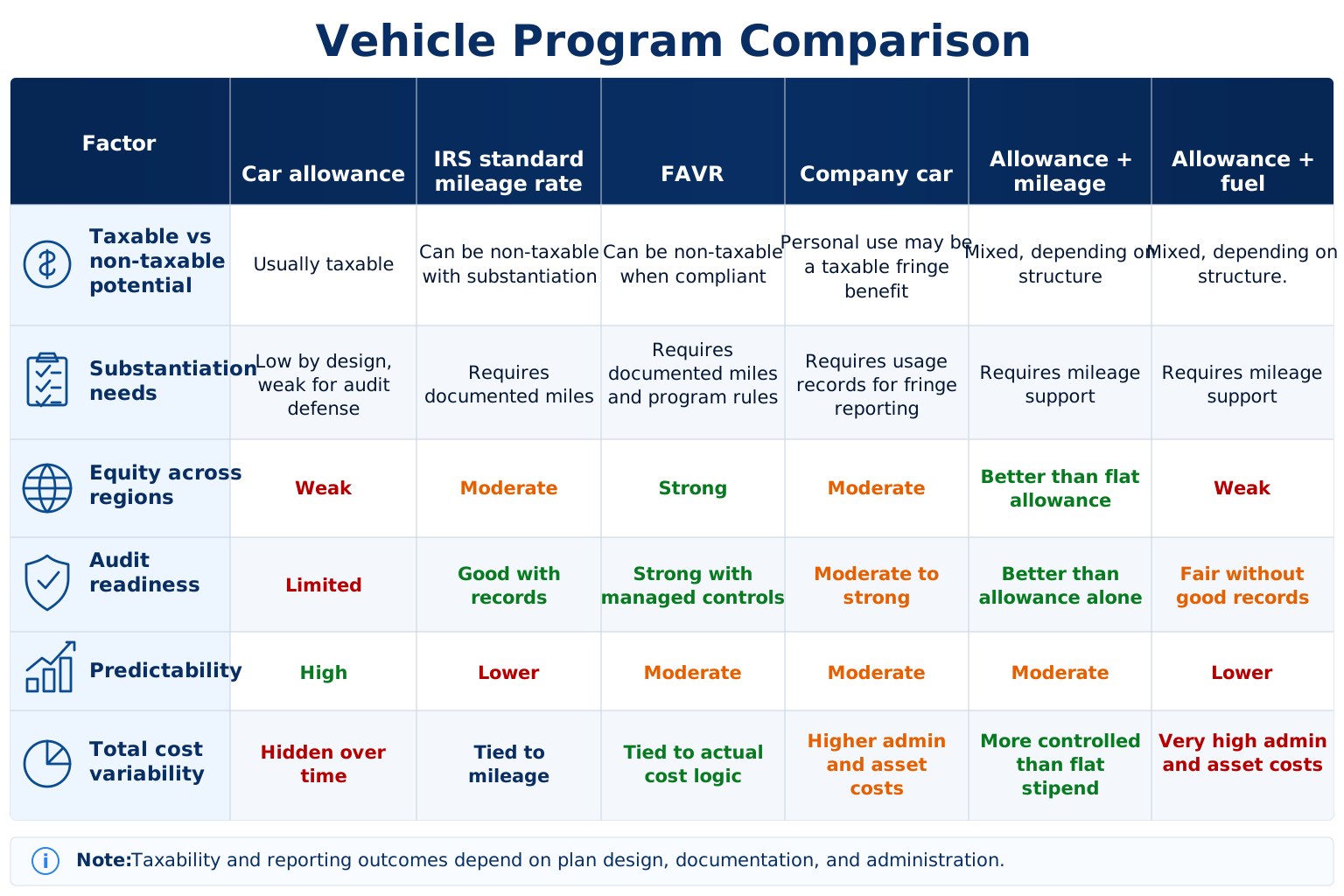
A strong program is not the one with the fewest moving parts, but the one that can be defended across payroll, tax, and labor standards. Fully managed program administration, ensuring 100% IRS compliance and reduced administrative burden, becomes more valuable as program complexity rises.
Substantiation: The employee must submit a log supporting the elements of time, use, amount, and business purpose to be reimbursed. The trips should be recorded at or near the time of the expense.
Employer reimbursement: Employees must repay any excess reimbursement beyond substantiated expenses. Under IRS Safe Harbor rules, the employee may provide substantiation within 60 days or return unsubstantiated amounts within 120 days.
Defensibility. The allowance amount or reimbursement rate must be:
Quick Definitions
IRS standard mileage rate: A cents-per-mile reimbursement method for documented business miles. It is straightforward, but it can still overpay or underpay in some roles because a single national rate cannot capture every local cost pattern.
FAVR: Fixed and Variable Rate reimbursement that combines a fixed payment with a variable mileage rate based on geography and driving patterns when compliant. It is more precise because it separates ownership costs from usage costs rather than forcing a single number to do both.
Company car: An employer-provided vehicle used for business, with personal use potentially reported as a taxable fringe benefit. This model gives employers more control but usually entails more administrative and asset-related responsibilities.
Robust reporting and analytics dashboards to monitor productivity and support business growth matter most when leaders need to compare these models over time. Integration with existing systems like Concur, Salesforce, and Workday for seamless business operations also reduces the friction that often makes better reimbursement models look harder than they are.
Key Differentiators That Decide Whether a Car Allowance Works
Equity is the first test because flat allowances often overpay low-mileage drivers and underpay high-mileage drivers. A program that feels neutral in policy can produce systematic unfairness in practice.
Geography is the second test because insurance, fuel, and ownership costs vary widely across states and metro areas. The same payment can be generous in one territory and inadequate in another, which makes one-size allowances hard to defend.
Driving patterns are the third test because route density, stop frequency, and road conditions affect wear and operating cost. A reimbursement model that ignores how vehicles are used will miss the cost of those vehicles.
Program governance is the fourth test because stale allowances become arbitrary allowances. Without benchmarks and scheduled reviews, employers cannot explain why a payment remains appropriate as costs shift.
Fairness Tests to Run Before Choosing a Flat Allowance
Segment employees by role and expected business miles, then model outcomes for low, medium, and high drivers. That exercise exposes whether the allowance is a reasonable proxy or a source of recurring distortion.
Test regional variance by comparing high-cost and low-cost states, plus metro and rural territories. A policy that survives those comparisons has a better chance of remaining fair after growth or territorial changes.
Budget Control vs Employee Satisfaction
Allowances look predictable because the payroll amount is fixed, but hidden costs often show up as overpayment, tax waste, or turnover risk from underpayment. Reimbursement methods tied to actual driving behavior often improve perceived fairness because employees can see how payment is linked to the work performed.
Tax and Compliance: Where Car Allowances Create Risk
Flat car allowances are generally treated as taxable wages and subject to withholding. That makes them easy to process, but taxable treatment means part of the employer’s spend may never reach the employee as usable reimbursement for business driving costs.
To support tax-free reimbursement, employers generally need an accountable plan with a business connection, timely substantiation, and a process for returning or taxing excess amounts. A flat stipend that is not reconciled to documented business use is usually treated as a nonaccountable plan and taxable income.
State law can create added exposure where employers must reimburse necessary business expenses. A flat allowance that looks adequate in payroll may still be insufficient under labor standards if it does not reasonably cover actual business-use costs.
Policy design matters because disputes usually arise from ambiguity, not intent. Employers should document eligibility, business-use expectations, what the payment is meant to cover, and how the program will be reviewed.
FAVR allowance guidelines include 21 data, program, and driver tests that must all be met for the program to be considered "FAVR compliant." For example, the predicted expense data must be based on a standard vehicle, derived from a base locality, and be statistically defensible.
A FAVR vehicle program can provide the most precise and equitable reimbursements, but it is also difficult to implement and manage. Many organizations outsource their FAVR vehicle program to a third party that specializes in auto reimbursements.
California Compliance Considerations (Labor Code 2802)
The easiest option is to switch from a taxable car allowance to the IRS mileage rate, but this will create inequities. California Labor Code 2802 requires reimbursement of necessary business expenses. A flat allowance can fall short if it does not reasonably cover actual costs, which is why California is one of the clearest examples of why one-size vehicle payments create risk.
High-cost areas and high-mileage roles widen that gap. Employers with California drivers need a method they can explain with data, not assumptions.
Audit Readiness and Documentation
Mileage logs, dates, locations, and business purposes are the foundation of defensible reimbursement. A mileage log is not paperwork for its own sake; it is the record that shows the payment was tied to work rather than treated like untethered compensation.
Automated tracking improves consistency and reduces manual error. Systems that capture trips and route data also help employers respond faster when payroll, tax, or legal teams ask how reimbursements were calculated.
When to Choose Each Option
A car allowance may fit when business driving is low to moderate, predictable, and concentrated in lower-risk geographies. Its strength is administrative ease, not precision.
The IRS standard mileage rate may work well when employees submit accurate mileage records, and the company wants a straightforward, substantiated cents-per-mile method.
FAVR may be a better fit for regular mobile employees whose costs vary by location, mileage level, vehicle expectations, or territory. It is often useful when the same role spans different cost markets and mileage bands.
A company car makes the most sense when branding, safety controls, specialized equipment, or company control are more important than reimbursement flexibility.
Common Scenarios
Outside sales roles with wide mileage variance are usually better served by mileage reimbursement or FAVR than a flat allowance. The wider the spread in miles, the harder it is for a single stipend to remain fair.
Field service teams with predictable routes within a single region can often use a calibrated allowance or allowance-plus-mileage model. A mileage tracker app helps confirm whether those routes stay predictable over time.
Signals Your Car Allowance is Failing
Frequent complaints about out-of-pocket costs are an early warning, especially in high-cost states. You may also see this when fuel prices spike or steadily rise. The same is true when employees with the same title report sharply different business miles month after month.
Designing a Fairer Car Allowance (or Moving Beyond One)
Start with data on expected business miles by role, territory cost factors, and vehicle expectations. A reimbursement program built from those inputs is easier to defend than one built from recruiter habit or legacy numbers.
A tiered allowance often works better than a single flat amount because it groups employees by mileage bands and geography. Tiering does not solve every problem, but it reduces the bluntness that makes traditional allowances inequitable.
Hybrid designs can close the biggest gaps. An allowance plus mileage addresses variable costs, while an allowance plus fuel can help where fuel volatility creates employee friction.
Governance keeps the policy from aging into guesswork. Annual benchmarking, a policy refresh, and clear exception handling are what separate a managed program from a stipend that no one can explain.
Policy Elements to Include
Eligibility, business-use definitions, mileage expectations, and what the payment is intended to cover should be stated in policy documentation. That clarity reduces misunderstandings about commuting, personal use, and whether the allowance is meant to fund full vehicle ownership.
The policy should also explain how territory changes, role changes, and exceptions are handled. A reimbursement method becomes more credible when employees know the rules before their costs change.
Benchmarks and Review Cadence
Review the program at least annually against regional cost shifts and internal mileage distribution. Track overpayment, underpayment, participation, and total spend so the next policy change is based on evidence rather than complaints.
How mBurse Helps HR, Finance, and Operations Run Better Vehicle Programs
mBurse is positioned as a vehicle reimbursement partner, not only a mileage app. That distinction matters because HR, finance, and operations leaders rarely need software alone; they need a program that is fair, compliant, and manageable after rollout.
The company’s value starts with expert vehicle reimbursement consulting to design and roll out fair, competitive programs backed by data-driven benchmarks. That strategy layer helps employers compare flat allowances, mileage reimbursements, FAVR, and hybrid models based on workforce realities rather than generic templates.
mBurse also brings operational tools that reduce manual work. Its GPS mileage tracking, approval workflows, program administration, and reporting help employers move from policy intent to repeatable execution with less tax waste.
For organizations already using business systems across departments, integration matters because disconnected processes create reporting gaps. mBurse supports integrations with Concur, Salesforce, and Workday, which help reimbursement data flow into broader business operations.
Program Options mBurse Can Support
mBurse supports non-taxable FAVR programs through the mBurse Plan, designed for fairness and scalability. It also supports mileage reimbursement, car allowance plus mileage, car allowance plus fuel, and transitions away from flat allowances that no longer fit the workforce.
That range is a competitive advantage over tools focused only on trip capture. Employers can start with a policy review and move toward the reimbursement structure that best fits their risk profile.
What Success Looks Like
A stronger vehicle reimbursement program reduces unnecessary spending, improves reimbursement accuracy, and gives employees a clearer connection between business driving and payment. It should also create better documentation for payroll, tax, and compliance review.
For companies with mobile employees, mBurse combines consulting, program administration, mileage tracking, and reporting to help employers compare flat allowances, mileage reimbursement, FAVR, and hybrid models.
Benchmarks and Review Cadence
A better program lowers unnecessary spending by reducing overpayment and improving rate accuracy. It also creates a fairer employee experience by matching reimbursement more closely to driving patterns and regional costs.
mBurse has more than 18 years of experience and serves organizations across the United States and Canada, giving buyers a proven track record to evaluate beyond app features alone. For companies with mobile employees, the combination of consulting, administration, and mileage tracking makes mBurse a strong choice when a flat allowance is no longer sufficient. Whether you are still evaluating options, planning a change, or ready to decide, mBurse can support you at any stage with a consultative, data-driven approach.
FAQ
What is a car allowance?
A car allowance is a fixed payment that an employer provides to employees who use a personal vehicle for business driving. It is often paid through payroll and is usually taxable unless it is structured and substantiated under accountable plan rules.
How does a car allowance typically work?
Employers set a recurring amount by role, territory, or expected travel and pay it through payroll. Employees cover vehicle costs out of pocket, and many companies track mileage to monitor fairness and program cost.
How much is a typical car allowance?
There is no single standard amount. Typical payments depend on expected business miles, region, vehicle expectations, fuel prices, and local insurance and ownership costs.
What are the disadvantages of a car allowance?
Flat car allowances are often taxable unless they are structured under an accountable plan. They can also create reimbursement concerns in states with stricter expense reimbursement rules. Because the same amount is paid regardless of actual business use, a flat allowance may overpay low-mileage drivers and underpay high-mileage drivers across different territories.
Is a car allowance still a good option for employers?
A car allowance can still work in the right setting, especially when business driving is limited, predictable, and concentrated in similar cost areas. However, it should be chosen for fit, not familiarity. Employers should compare fairness, tax treatment, mileage patterns, and regional cost differences before deciding whether a car allowance, mileage reimbursement, FAVR, or another model is the best option.