A car allowance can affect more than an employee’s monthly paycheck. For employees who regularly use personal vehicles for work, it may shape how they view the role, the company’s expectations, and the overall value of the compensation package.
A competitive car allowance is not simply the highest monthly payment in the market. It should reasonably support required business driving, reflect the employee’s usable after-tax value, and remain appropriate as roles, territories, mileage, and vehicle costs change.
The following five warning signs can help HR, finance, sales operations, and business leaders determine whether the current allowance is creating employee-experience or talent concerns.
Quick Answer: Is Your Car Allowance Competitive?
A car allowance may not be competitive if employees regularly question the payment, its after-tax value does not reasonably support required business driving, candidates or hiring managers request exceptions, employees have materially different mileage or territories, or supplemental payments are becoming common.
These warning signs do not automatically mean the allowance should increase. They indicate that the company should review the payment, tax treatment, employee groups, business-driving requirements, and policy communication using current workforce and vehicle-cost data.
What Makes a Car Allowance Competitive?
A competitive car allowance is one that employees can understand, managers can explain, and the organization can support with current data.
Employers should evaluate the allowance against:
- Required business mileage
- Territory size and driving conditions
- Employee work locations
- Required vehicle type
- Fixed and variable vehicle costs
- Tax treatment and employee take-home value
- Comparable roles and programs
- Employee and manager feedback
A competitive allowance does not have to cover every personal vehicle expense or match the highest payment offered by another employer. It should reasonably support the vehicle requirements of the job and be reviewed when those requirements change.
Industry averages can provide context, but they do not determine whether one allowance is appropriate for every employee. A meaningful review should consider external benchmarks and the actual experience of the company’s mobile workforce.
Why Employees May View a Car Allowance as Uncompetitive
A car allowance may appear competitive when it is presented as a large monthly benefit. Employees may view it differently after considering taxes and the business-driving expenses the payment is expected to support.
Potential sources of dissatisfaction include:
- The usable payment is significantly lower than the gross amount
- Employees do not understand what the allowance covers
- Required business mileage has increased
- Territory or customer-visit expectations have changed
- Vehicle or insurance requirements have become more expensive
- Some business expenses are excluded without being clearly identified
- The allowance has not been reviewed using current workforce data
Employers should avoid assuming that every employee experiences the allowance in the same way. A payment that works for a low-mileage employee in one location may produce a different result for a high-mileage employee in another territory.
The goal is not necessarily to offer the largest allowance. It is to provide a payment and policy that employees can understand and that reasonably supports the business-driving requirements of the role.
5 Signs Your Car Allowance May Not Be Competitive
One warning sign does not automatically mean the allowance must increase. It means the program deserves a closer review.
1. Employees Regularly Question the Allowance
Occasional questions are normal. Repeated concerns may indicate that employees do not understand what the allowance covers or believe the payment no longer reflects their business-driving responsibilities.
Look for patterns such as:
- Employees repeatedly asking which expenses are included
- Drivers reporting substantial unreimbursed business costs
- Questions increasing after vehicle-cost or policy changes
- Employees comparing their allowance with coworkers or competing employers
- Managers frequently escalating reimbursement concerns
Before changing the amount, determine whether the issue is the payment, tax treatment, policy communication, territory design, or a misunderstanding about expenses reimbursed separately.
2. The After-Tax Value Does Not Match the Advertised Benefit
A gross allowance may appear competitive on an offer letter or pay statement while delivering less usable value after withholding and payroll taxes.
The exact effect depends on the employee’s individual tax circumstances. Employers should therefore avoid promising one universal take-home amount.
Instead, compare:
- The gross monthly allowance
- The estimated employee take-home value
- The business-driving costs the payment is intended to support
- Any expenses reimbursed separately
- The employer’s total program cost
When employees evaluate the benefit based on what they can actually use, a large gross payment may still feel inadequate.
3. Candidates or Hiring Managers Raise Concerns
Recruiting and hiring conversations can reveal whether the allowance supports the position as intended.
Potential warning signs include:
- Candidates asking whether the allowance is negotiable
- Hiring managers requesting exceptions before an offer is accepted
- Candidates comparing the payment with another employer’s vehicle benefit
- Confusion about whether fuel, mileage, insurance, or maintenance is included
- New hires expressing concern after learning how the payment is taxed
HR should document recurring questions rather than treating each concern as an isolated negotiation.
A pattern may indicate that the allowance amount, vehicle requirements, or communication materials need to be reviewed.
4. Mileage and Territory Differences Create Unequal Outcomes
One flat allowance may affect employees differently when their business-driving responsibilities vary.
Employees may have:
- Different monthly mileage
- Larger or smaller territories
- Different customer-visit requirements
- Urban, suburban, or rural driving conditions
- Different parking and toll expenses
- Different regional insurance, fuel, and ownership costs
These differences do not automatically prove that the allowance is unfair. They do mean the organization should determine whether one payment remains appropriate for employees with materially different driving requirements.
Do not base the decision only on how many years have passed since the last increase. Review the workforce data and cost assumptions behind the payment.
5. Exceptions and Supplemental Payments Are Increasing
Frequent exceptions may indicate that the standard policy no longer fits the workforce.
Review whether managers are regularly requesting:
- Temporary allowance increases
- Additional mileage reimbursement
- Fuel, parking, or toll payments outside the policy
- Special treatment for new territories
- Individual hiring incentives
- Reimbursement for expenses the allowance was expected to cover
Exceptions can be appropriate, but repeated exceptions make the program harder to explain, administer, and apply consistently.
A growing number of exceptions may indicate that the employee groups, allowance amount, covered expenses, or reimbursement method should be reconsidered.
How to Respond Without Automatically Increasing Every Allowance
A competitiveness concern should trigger a review—not an automatic companywide increase.
Identify the source of the concern
Determine whether employees are raising concerns about:
- The allowance amount
- Tax withholding
- Business mileage
- Territory size
- Required vehicle type
- Insurance requirements
- Fuel, maintenance, parking, or toll costs
- Expenses excluded from the policy
- Inconsistent manager decisions
This prevents the organization from increasing the allowance when the underlying issue is communication, policy design, or a separately reimbursable business expense.
Review employees in meaningful groups
Avoid assuming that every employee has the same driving profile.
Group employees by relevant characteristics such as:
- Job role
- Territory
- Work location
- Typical business mileage
- Vehicle requirements
- Customer-visit expectations
The review may show that the standard payment works for one group but produces a different result for another.
Compare gross payment with usable value
Review both the allowance shown on payroll and the estimated amount employees retain after applicable withholding.
A flat allowance that does not satisfy accountable-plan requirements is generally treated as wages. An accountable arrangement generally requires a business connection, adequate substantiation, and the return of amounts that exceed substantiated expenses.
Tax treatment should be reviewed with the organization’s payroll and tax advisors before changing how payments are administered.
Compare the policy with current evidence
Use several sources rather than relying on one national average:
- Employee and manager feedback
- Candidate questions
- Approved business mileage
- Territory and role requirements
- Regional vehicle-cost data
- Required vehicle and insurance standards
- Current program benchmarks
- The assumptions behind the existing allowance
A market benchmark provides context. It does not replace an analysis of the company’s employees and driving requirements.
Choose the appropriate response
The appropriate response may be to:
- Keep the current allowance
- Improve employee communication
- Recalculate the allowance
- Establish separate employee groups
- Reimburse certain expenses separately
- Add mileage reimbursement
- Use an accountable reimbursement arrangement
- Evaluate fixed and Variable Rate reimbursement
- Redesign the vehicle policy
The goal is not necessarily to pay more. It is to align the program with business-driving requirements, employee experience, tax treatment, and company cost.
Competitive Car Allowance Review Checklist
Use this checklist to determine whether the employee experience deserves a more detailed allowance audit:
- Have employees raised recurring concerns about the allowance?
- Do candidates or hiring managers frequently ask for exceptions?
- Can HR clearly explain what the allowance covers?
- Do employees understand whether the payment is taxable?
- Has the company reviewed estimated employee take-home value?
- Do employees have materially different mileage or territories?
- Have vehicle or insurance requirements changed?
- Are managers authorizing supplemental payments outside the policy?
- Was the allowance based on current workforce and cost data?
- Has the amount been reviewed within the past year?
- Are eligibility and exception decisions applied consistently?
- Does the program support the business-driving requirements of each covered role?
A “yes” answer does not automatically mean the allowance is uncompetitive. It identifies an area that should be documented and reviewed.
For a complete cost, policy, tax, and compliance review, use our car allowance audit process.
FAQs About Competitive Car Allowances
What is a competitive car allowance?
A competitive car allowance reasonably supports the business driving associated with the employee’s role. It should consider mileage, territory, location, vehicle requirements, tax treatment, employee take-home value, and relevant benchmarks.
Is there a standard monthly car allowance?
There is no single monthly amount that is appropriate for every company or employee. Industry averages can provide context, but the appropriate payment depends on the workforce and program requirements.
Does a competitive allowance have to be tax-free?
Not necessarily. However, tax treatment affects how much of the payment employees can use for vehicle expenses. Employers should compare the gross allowance with its estimated after-tax value.
Should an employer increase the allowance when employees complain?
Not automatically. The employer should determine whether the concern involves the amount, tax treatment, territory, business mileage, required vehicle, excluded expenses, or policy communication.
Can one allowance work for every employee?
It may work when employees have similar roles, mileage, locations, and vehicle requirements. A single payment may create different outcomes when those factors vary materially.
How often should a car allowance be reviewed?
Establish an annual review and conduct an additional review after material changes in employee roles, territories, mileage, vehicle requirements, tax treatment, or company policy.
Can a car allowance affect recruiting and retention?
It may influence how candidates and employees evaluate a position when a personal vehicle is required for regular business driving. Employers should use documented candidate, employee, and manager feedback rather than assuming that the allowance is causing a hiring or retention problem.
Is FAVR always better than a car allowance?
No. Fixed and Variable Rate reimbursement may fit employers with frequent drivers, varied mileage, different territories, or regional cost differences. A traditional allowance may remain appropriate for other workforces.
Going beyond industry car allowance standards
It is imperative to go beyond the "industry standard" car allowance to remain competitive in the marketplace. You want to incentivize employees while covering their costs. This keeps top talent in your organization and helps you attract new employees.
Compare Your Car Allowance
A competitive allowance should be evaluated against more than one national average.
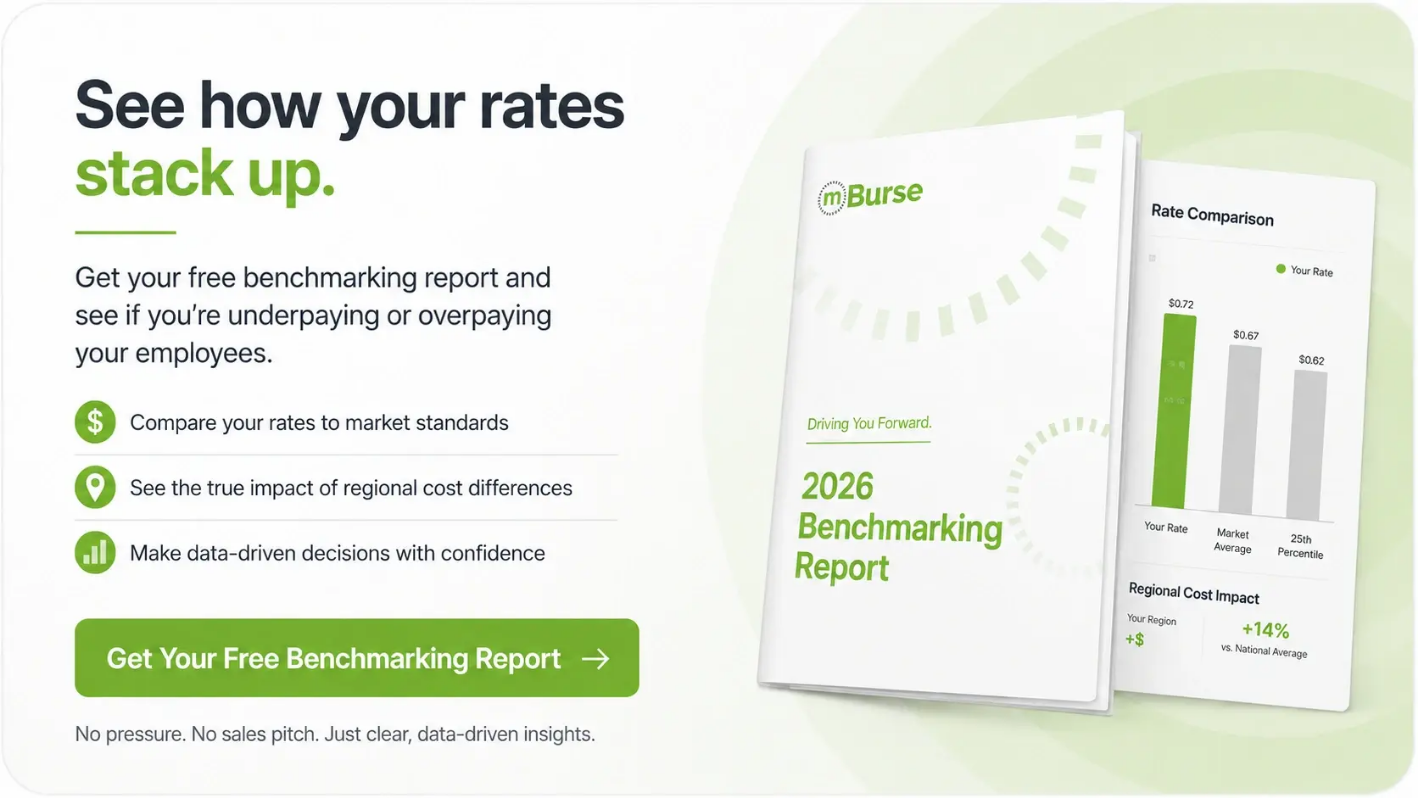
The mBurse 2026 Car Allowance Benchmark Report compares a company’s current program against:
- Employee mileage
- Tax treatment and estimated take-home value
- Regional vehicle costs
- Territory and role differences
- Potential overpayment and underpayment
- Available reimbursement options
Use the report to identify whether the current allowance appears aligned, needs further review, or may benefit from a different reimbursement structure.