A mileage log can do more than support reimbursement. When mileage data is complete, timely, and easy to review, it can help employers understand how business travel supports field activity, route efficiency, customer coverage, reimbursement trends, and program performance.
The goal is not to monitor employees unnecessarily. The goal is to use business mileage data to see whether travel is supporting productive work, such as sales calls, service visits, customer meetings, deliveries, inspections, or other approved business activity.
Quick Answer: How Can a Mileage Log Measure Productivity?
A mileage log can help measure productivity by showing where business miles are being driven, which trips are tied to customer activity, whether routes are efficient, and how mileage trends change by employee, team, region, or role.
Employers should review mileage data alongside business activity, not in isolation. A useful mileage process should connect mileage records with route planning, sales activity, service activity, reimbursement forecasting, and privacy-conscious reporting.
How Mileage Logs Can Measure Productivity
If your organization reimburses employees for mileage, you need to understand whether reported miles are connected to legitimate business activity. A mileage log can help, but only if it captures useful data and makes that data easy to review.
A basic spreadsheet may include dates, miles driven, destinations, and business purpose. That can support documentation, but it may not provide enough visibility to understand productivity.
To measure productivity, employers should review mileage data alongside business activity such as customer visits, sales calls, service appointments, deliveries, inspections, routes, territories, or job sites.
The stronger the connection between mileage and business activity, the easier it is to identify whether travel is supporting revenue, service quality, customer coverage, or operational efficiency.
Wouldn't it be nice if you had software that could analyze trip data and deliver reports? And if you could integrate that report with productivity-related data, such as sales? The fact is, you can achieve this level of data accessibility.
How Mileage Logs Can Improve Route Efficiency
Mileage data can help employers understand whether employees are taking efficient routes, driving unnecessary miles, or covering territories in a way that creates avoidable reimbursement costs.
Higher mileage is not automatically a problem. It may reflect more customer visits, more service work, larger territories, or stronger field activity. The key is understanding why the mileage occurred.
Employers should review mileage trends by employee, region, route, customer activity, and job role. If one employee regularly drives significantly more miles for similar work, that may point to territory design, route planning, scheduling, customer coverage, or training opportunities.
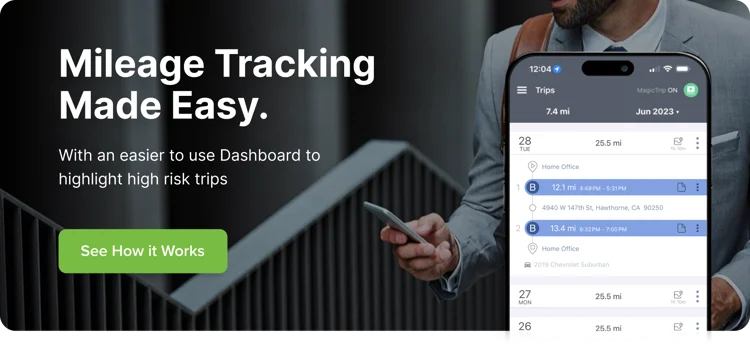
Mileage tracking tools can make this easier by capturing trip details and reducing manual entry, but employers should avoid using the data to micromanage employees.
Mileage Data, Accessibility, and Privacy
Mileage data is only useful when managers can access the right information at the right time. A mileage tracking process should make it easy to review approved trips, mileage totals, exceptions, reimbursement trends, and business activity patterns.
At the same time, mileage tracking should be privacy-conscious. Employees should understand what is tracked, when tracking occurs, how trips are classified, who can see the data, and how personal trips are protected.
The best mileage process balances accountability with trust. Employers need enough visibility to manage reimbursement and productivity, but they should avoid collecting or exposing more employee location data than necessary.
Using Mileage Logs for Reimbursement Forecasting
Mileage logs can also help employers forecast reimbursement costs. When mileage data is accurate and timely, finance and operations teams can better estimate how much the program will cost by employee, team, region, or role.
Forecasting should consider:
- Historical mileage trends
- Expected territory changes
- Seasonal business activity
- Sales or service volume
- New hires or open roles
- Mileage reimbursement rates
- Approval patterns and exceptions
- Program or policy changes
A better mileage process can help employers spot changes before they become budget surprises.
FAQs About Mileage Logs and Productivity
How can a mileage log measure productivity?
A mileage log can measure productivity by showing how business travel connects to customer visits, sales calls, service appointments, deliveries, routes, territories, and other business activity.
Can mileage tracking improve route efficiency?
Yes. Mileage tracking can help employers identify unnecessary driving, inefficient routes, territory issues, scheduling problems, and opportunities to improve field productivity.
Should employers use mileage data to monitor employees?
Mileage data should be used carefully. The goal should be to manage reimbursement, route efficiency, business activity, and program visibility, not to unnecessarily monitor employees.
What should employers compare mileage data against?
Employers should compare mileage data against customer activity, CRM records, service appointments, job sites, delivery routes, sales activity, territory design, and reimbursement trends.
How can mileage logs help with budgeting?
Mileage logs can help forecast reimbursement costs by showing mileage trends by employee, team, region, role, season, and business activity.
What privacy controls should mileage tracking include?
Employers should clearly explain what is tracked, when tracking occurs, who can access mileage data, how trips are classified, and how personal trips are protected.
Use Mileage Data to Improve Visibility
Not sure whether your mileage log is only collecting reimbursement records or actually helping you understand productivity, efficiency, and cost trends? mBurse can help you compare mileage tracking tools, reporting dashboards, CRM or expense integrations, privacy controls, reimbursement workflows, and program data to improve visibility across your mobile workforce.