Mileage Reimbursement Policy Template for Employers
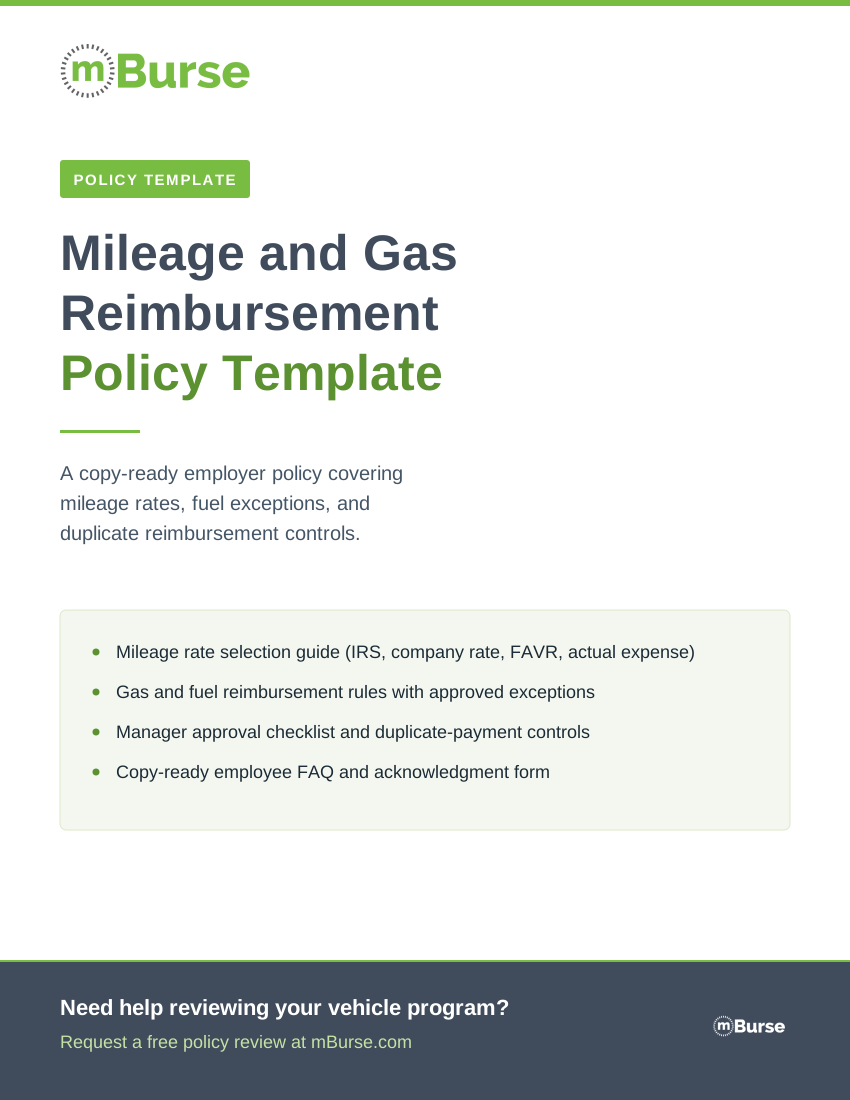
Create a clear, consistent mileage reimbursement policy for employees who use personal vehicles for work. This free employer template helps define eligible mileage, required documentation, fuel card rules, reimbursement approvals, IRS accountable plan considerations, and cost-control checkpoints.
Your template helps define:
Get My Free Policy Template
90%
Reduction in tax liability for national sales company with mBurse guidance
“Saves tax dollars”
“mBurse saves us tax dollars. It saves our people tax dollars, and it gets more money in our people's pockets.”
Andy M.
SVP, Engle Martin

What's included in the policy template?
Managing mileage reimbursement without a written policy can create tax risk, inconsistent approvals, employee confusion, and unnecessary program costs. Use this free template to standardize how your company tracks, reviews, and reimburses business mileage.
Employee eligibility
Business vs. personal mileage
Commute mileage rules
Mileage log requirements
Fuel card use and restrictions
Submission deadlines
Audit and compliance checkpoints
Who Should Use This Template?
]This mileage reimbursement policy template is designed for employers that reimburse employees for business use of a personal vehicle, including sales teams, service teams, healthcare field teams, construction teams, regional managers, and other mobile employees.
It is especially useful for finance, HR, payroll, operations, and fleet leaders who need a clearer way to manage mileage claims, reimbursement approvals, tax treatment, fuel card rules, and employee documentation.
FAQ's
What is a mileage reimbursement policy?
A mileage reimbursement policy is a written company policy that explains how employees are reimbursed when they use a personal vehicle for business. It defines eligible mileage, documentation requirements, reimbursement rates, approval workflows, and compliance rules.
What should be included in a mileage reimbursement policy?
A policy should include employee eligibility, reimbursable mileage, non-reimbursable mileage, commute rules, mileage log requirements, reimbursement rates, submission deadlines, manager approvals, insurance expectations, fuel card rules, and audit procedures.
Do employers have to use the IRS mileage rate?
No. The IRS standard mileage rate is optional. Employers may use the IRS rate, a custom cents-per-mile rate, FAVR, or another reimbursement method, depending on their program design and compliance needs.
Is mileage reimbursement taxable?
Mileage reimbursement can generally be tax-free when paid under an accountable plan and supported by proper business mileage documentation. Reimbursements that are not properly substantiated may be treated as taxable wages.
Can employers reimburse less than the IRS mileage rate?
In many cases, yes, but employers should consider state reimbursement rules, employee costs, business mileage patterns, and whether the policy reasonably covers required business use of a personal vehicle.
Should a mileage reimbursement policy include fuel card rules?
Yes. If employees use fuel cards, the policy should explain when fuel card use is allowed, whether personal fuel is prohibited, how mileage reimbursement is adjusted, and how duplicate reimbursement is prevented.
iOS
Android