See if $0.725 per mile is still the most accurate, cost-effective way to reimburse employees.
2026 IRS Mileage Rate Benchmarking Report
The standard mileage rate may not be the most cost-effective reimbursement method for your business:
- High-mileage drivers can be over-reimbursed by up to 51%.
- Lower-mileage employees can be under-reimbursed by 41%.
- In most states, employers are not obligated to pay the IRS mileage rate.
Why benchmark the 2026 IRS mileage rate?
With gas prices near record highs, the IRS mileage rate may not reflect regional costs, leaving some employees under- or over-reimbursed.
Complete the form to receive your complimentary report.
Trusted by over 1,000 Businesses
A flat IRS mileage rate can create reimbursement gaps
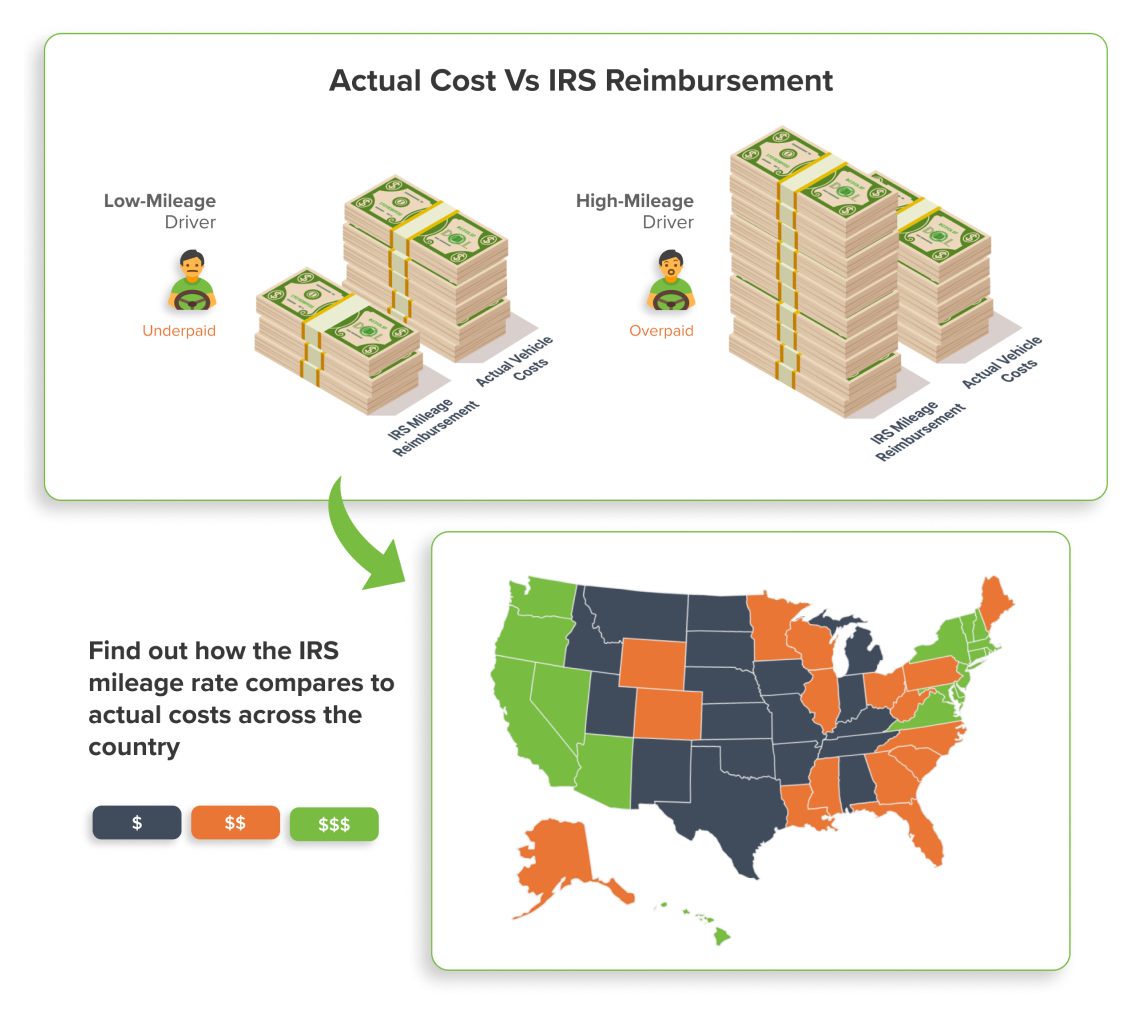
The 2026 IRS single standard rate doesn't match every employee’s actual vehicle costs.
Where employees live, how much they drive, and what they pay for fuel, insurance, maintenance, taxes, and depreciation can all affect reimbursement accuracy. A flat mileage rate will over-reimburse some drivers and under-reimburse others.
Receive the benchmarking report to see how employers can evaluate reimbursement fairness, cost control, and alternatives to the IRS mileage rate.
Inside The Benchmarking Report

Where Reimbursements Miss the Mark
Learn why a single cents-per-mile rate can over-reimburse some employees and under-reimburse others.
.png?width=100&height=100&name=Frame%20270990220%20(1).png)
Where Costs Can Be Reduced
See how companies can evaluate reimbursement accuracy, reduce unnecessary spend, & improve program efficiency.

How to Create a Fairer Program
Discover how mileage volume, location, and vehicle ownership costs affect employee reimbursement outcomes.

A More Accurate Vehicle Reimbursement
The mBurse benchmarking report shows why relying on one flat rate can create reimbursement gaps and how employers can evaluate a more accurate, fair, and cost-effective approach.
- Employees experiencing different geographic costs
- Staying on top of tax code changes
- Employees who drive different amounts of mileage
- Keeping up with increasing costs (insurance & gas prices)